
Introduction
Staying fit and healthy is one of the most important things in life. Exercise is the key to staying strong, having energy, improving mood, and preventing many diseases. But many beginners feel that they need a gym, expensive equipment, or personal trainers to get started. The truth is: you can get fit at home with no or minimal equipment.
This article will give you simple, step-by-step, beginner-friendly exercises that anyone can do at home. We will also cover tips on warm-up, cool-down, diet, motivation, and daily routines to stay fit.
1. Why Home Exercise Is Great for Beginners
Starting at home has many advantages:
- No commuting to the gym
- No expensive memberships
- You can exercise at your own pace
- Privacy — some beginners feel shy in gyms
- Flexible timing
- Less pressure — you can start slowly
Home workouts are perfect for beginners who want a strong body, flexibility, stamina, and confidence.
2. Important Tips Before Starting Any Exercise
Before you begin:
- Start Slowly – Don’t push yourself too much in the first week
- Warm Up – Always warm up to prevent injury
- Focus on Form – Correct posture is more important than speed
- Stay Hydrated – Keep water nearby
- Consistency Is Key – 15–30 minutes daily is better than long sessions occasionally
- Listen to Your Body – Stop if you feel pain
- Space & Safety – Ensure you have enough room and non-slippery surface
3. Warm-Up Exercises for Beginners
Warming up increases blood flow and prepares muscles.
(a) Marching in Place
- 1–2 minutes
- Lift knees and pump arms
- Improves circulation
(b) Arm Circles
- 10 forward, 10 backward
- Loosens shoulder joints
(c) Neck Rotations
- Slowly rotate neck clockwise and counterclockwise
- Reduces stiffness
(d) Side Bends
- Stretch arms overhead, bend gently to each side
- Activates core muscles
(e) Ankle Circles
- Rotate ankles both ways
- Prepares legs for exercise
Warm-up should last 5–7 minutes.
4. Beginner-Friendly Cardio Exercises at Home
Cardio improves heart health, stamina, and burns calories.
(a) Jumping Jacks
- 3 sets × 20 reps
- Stand straight, jump, spread arms and legs, return
- Great for full-body warm-up
(b) High Knees
- 2–3 minutes
- Lift knees to chest, pump arms
- Builds stamina
(c) Step-Ups
- Use a sturdy chair or step
- 10–15 reps each leg
- Improves legs and balance
(d) March in Place
- Beginner-friendly alternative to running
- Low impact, easy on knees
(e) Dancing
- Put music on for 10–15 minutes
- Fun way to do cardio at home
5. Strength Training Exercises for Beginners
Strength exercises build muscle, improve metabolism, and keep bones strong.
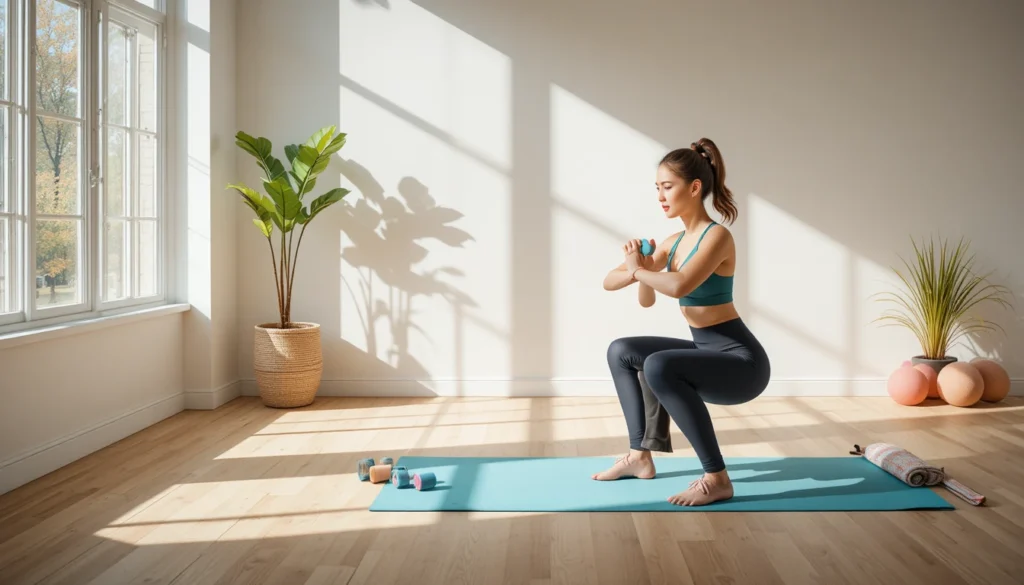
(a) Bodyweight Squats
- Feet shoulder-width apart
- Sit back like on a chair
- 3 sets × 10–15 reps
- Strengthens thighs, glutes, and core
(b) Wall Push-Ups
- Hands on wall, step back
- 2–3 sets × 10–12 reps
- Good for chest, shoulders, arms
(c) Knee Push-Ups
- Easier than full push-ups
- 2–3 sets × 8–10 reps
- Builds upper body strength
(d) Glute Bridges
- Lie on back, knees bent, lift hips
- 2–3 sets × 10–15 reps
- Strengthens glutes and lower back
(e) Chair Dips
- Sit on chair edge, hands beside hips, lift body
- 2 sets × 8–10 reps
- Works triceps and shoulders
6. Core Exercises for Beginners
Strong core improves posture, balance, and reduces back pain.
(a) Plank (Knee Plank First)
- Hold 20–30 seconds
- Gradually increase to 1 minute
- Builds abs, back, and shoulders
(b) Bird Dog
- On hands and knees, extend opposite arm and leg
- 10 reps each side
- Strengthens core and balance
(c) Dead Bug
- Lie on back, raise legs 90 degrees, lower opposite arm and leg
- 10 reps each side
- Beginner-friendly abs exercise
(d) Seated Knee Lifts
- Sit on chair, lift knees slowly
- 10–15 reps
- Activates lower abs
(e) Side Plank (Knee Variation)
- Hold 15–20 seconds each side
- Improves oblique muscles
7. Flexibility and Stretching
Stretching prevents injury and improves flexibility.
(a) Hamstring Stretch
- Sit on floor, reach for toes
- 15–20 seconds each leg
(b) Shoulder Stretch
- Pull arm across chest, hold 15 seconds each side
(c) Quadriceps Stretch
- Stand, pull ankle to glutes
- 15 seconds each leg
(d) Cat-Cow Stretch
- On hands and knees, arch and round back
- 10 repetitions
(e) Neck Stretch
- Tilt head to each side gently
- 10 seconds each
Stretching can be done before and after workouts.
8. Balance and Coordination Exercises
Balance improves daily life movements and reduces fall risk.
(a) Heel-to-Toe Walk
- Walk straight line heel to toe
- 10 steps forward, 10 back
(b) Single-Leg Stand
- Stand on one leg 15–20 seconds
- Switch legs
(c) Side Leg Raises
- Stand, lift one leg sideways
- 10–12 reps each leg
(d) Marching with Eyes Closed (Optional)
- Advanced beginner exercise for coordination
9. Easy Equipment for Beginners at Home
You don’t need a gym, but a few items help:
- Resistance bands
- Dumbbells (1–3 kg)
- Yoga mat
- Stability ball (optional)
- Chair
Even without equipment, bodyweight exercises are enough to get fit.
10. Sample 30-Minute Beginner Home Workout Routine
Warm-Up (5–7 minutes)
- March in place 2 min
- Arm circles 1 min
- Side bends 1 min
- Neck rotations 1 min
Cardio (8 minutes)
- Jumping jacks 2 min
- High knees 2 min
- Step-ups 2 min
- March in place 2 min
Strength (10 minutes)
- Bodyweight squats 10 reps × 2 sets
- Wall push-ups 10 reps × 2 sets
- Glute bridges 10 reps × 2 sets
- Chair dips 8 reps × 2 sets
Core (5 minutes)
- Knee plank 20–30 sec × 2
- Bird dog 10 reps each side
- Seated knee lifts 10 reps
Cool-Down/Stretching (5 minutes)
- Hamstring stretch 20 sec each leg
- Shoulder stretch 15 sec each side
- Cat-cow 10 reps
- Neck stretch 10 sec each side
11. Motivation Tips for Beginners
- Set realistic goals
- Track your progress
- Exercise at the same time daily
- Start with 15 minutes if needed
- Play music or videos
- Reward yourself after a week or month
- Join online groups for beginners
Consistency beats intensity in the first months.
12. Common Mistakes Beginners Make
- Doing too much too soon
- Not warming up or cooling down
- Poor posture
- Skipping rest days
- Not drinking enough water
- Ignoring nutrition
Avoid these mistakes to prevent injury and burnout.
13. Nutrition Tips for Beginners Exercising at Home
Exercise alone is not enough. Good nutrition helps:
- Eat protein-rich meals
- Include fruits and vegetables
- Drink plenty of water
- Avoid processed foods
- Have healthy snacks like nuts, yogurt, and fruits
- Don’t skip meals
- Balance carbs, protein, and fats
14. Rest and Recovery
Rest days are essential:
- Helps muscles repair
- Prevents fatigue
- Improves mental health
Beginner schedule: 4–5 workout days, 1–2 rest days
15. Tracking Progress
Keep a simple diary:
- Write exercises and reps
- Note duration and energy levels
- Track weight, if desired
- Celebrate small improvements
Tracking motivates and keeps you consistent.
16. Mental Benefits of Home Exercise
Exercise improves:
- Mood
- Focus and clarity
- Confidence
- Stress control
- Sleep quality
A strong mind supports a strong body.
17. How to Stay Consistent
- Keep workouts simple
- Set reminders
- Invite family or friends
- Create a small dedicated space at home
- Use short, effective routines (15–30 minutes)
Small consistent steps produce big results.
18. Optional Add-Ons for Beginners
Once confident:
- Light dumbbells for squats, presses
- Resistance bands for arms and legs
- Yoga routines for flexibility
- Jump rope for cardio
- Online beginner workout videos
19. Safety Tips
- Stop immediately if you feel pain
- Avoid slippery surfaces
- Use proper shoes if needed
- Don’t overdo it first week
- Consult a doctor if you have chronic issues
Safety ensures you continue exercising without setbacks.
20. Conclusion
Home workouts are perfect for beginners. You don’t need a gym or expensive equipment. By following simple cardio, strength, core, flexibility, and balance exercises, combined with good nutrition, hydration, sleep, and rest, you can stay fit, strong, and healthy.
Key Points:
- Start slowly, be consistent
- Focus on form and safety
- Eat nutritious foods
- Rest and recover
- Track your progress
Even 20–30 minutes daily can make a huge difference in strength, energy, confidence, and overall health.
Begin today, stay consistent, and build a strong body and a healthy mind at home.